Pad Thai Chaiya
Compared directly, Chaima’s Chaiya is fruitier, more tangy and lighter. Sweetness is deliberately kept in the background, allowing the fruity acidity to come forward.
“Which of your Pad Thai is the classic one?” We hear this question again and again. There is no single answer that applies to all of Thailand. At Chaima, you can discover two clearly different characters: Chaiya and Korat.
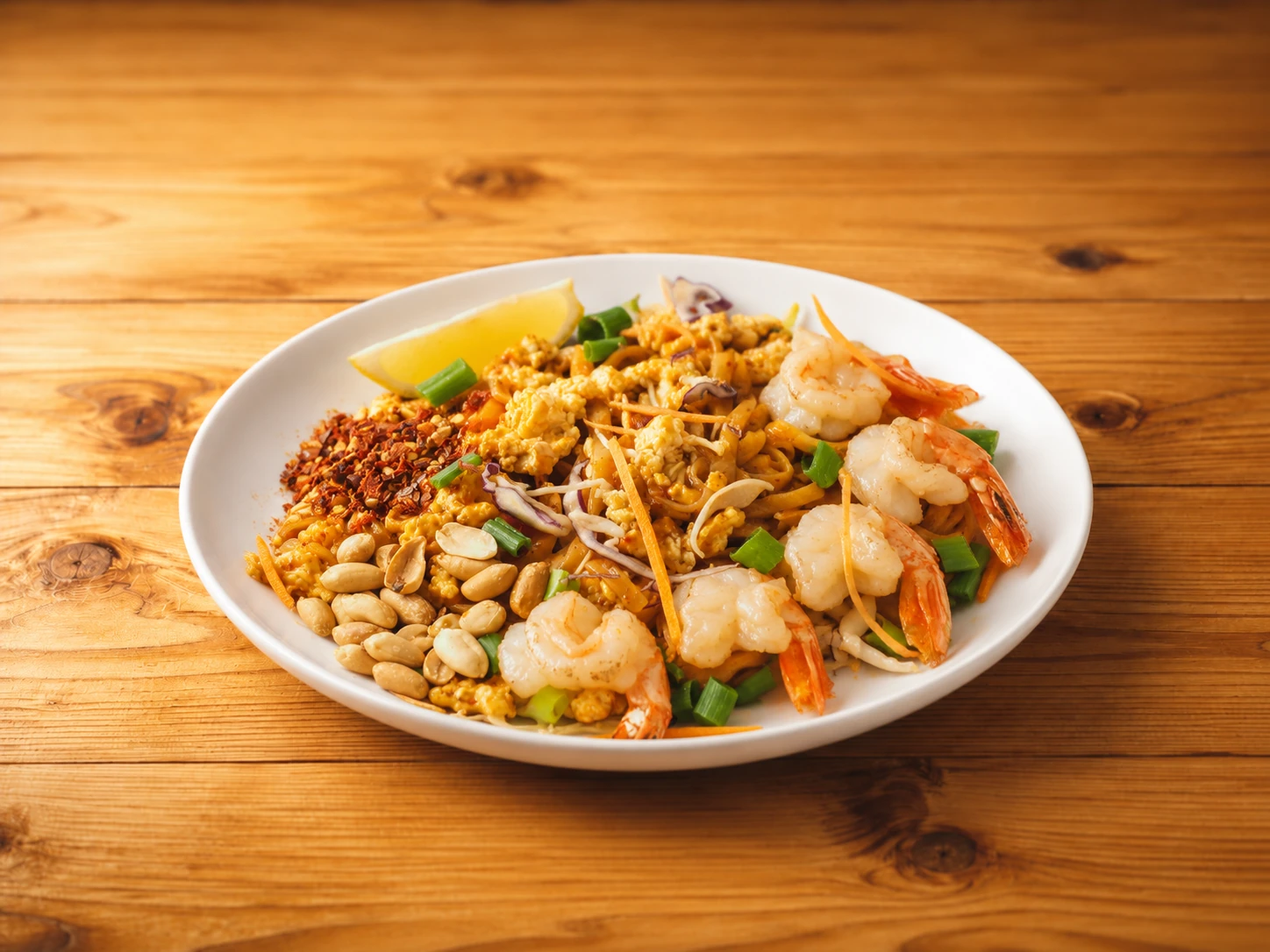
The differences should not exist only on the menu – you should actually be able to taste them.
Compared directly, Chaima’s Chaiya is fruitier, more tangy and lighter. Sweetness is deliberately kept in the background, allowing the fruity acidity to come forward.
At Chaima, Korat is bolder, more savoury, deeper in aroma and slightly spicier. This style draws on the distinct noodle tradition surrounding Pad Mee Korat.
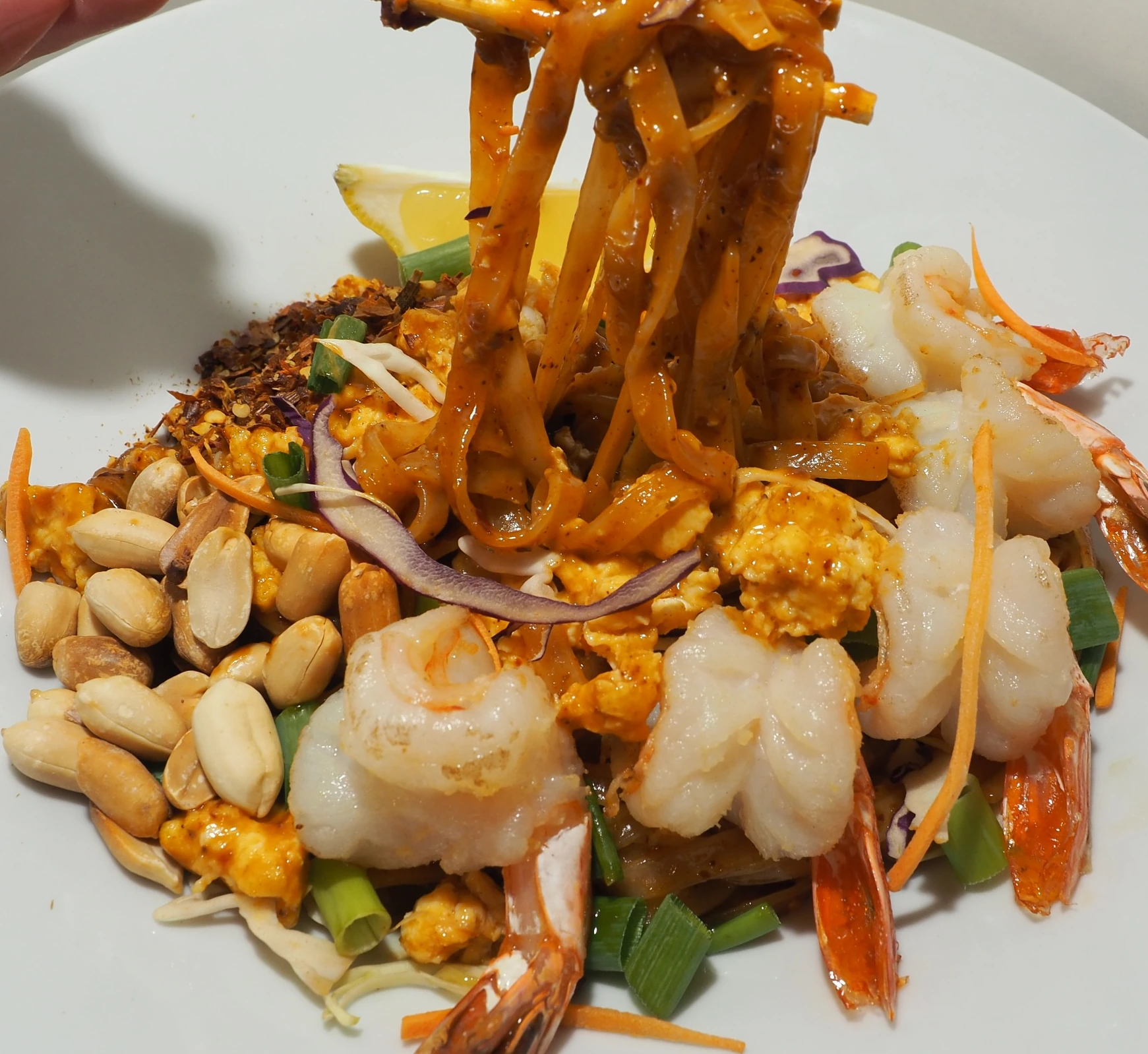
Pad Thai is built around a balance of sweet, sour, salty, savoury and umami-rich flavours. How strongly each element is emphasised, however, varies from place to place.
Historically, too, Pad Thai cannot be reduced to one single, unchanging recipe. Regional noodle traditions, ingredients and individual cooking styles place the emphasis differently.
Rather than maintaining a separate map on every dish page, these two trails lead directly to the shared Chaima origin map on our homepage.
Chaiya lies in Surat Thani Province in southern Thailand. On our Pad Thai page, the name represents Mrs Chaima’s fruitier, more tangy flavour profile.
Show Chaiya on the origin map →Korat has its own rice-noodle tradition in Pad Mee Korat. Mrs Chaima carries this bolder regional character into her own Pad Thai Korat.
Show Korat on the origin map →Its origins are often told in an overly simplified way. A more careful approach is to show several stages of development and distinguish between documented spread and an “invention” that cannot be conclusively proven.
Stir-fried noodle dishes and Chinese-influenced noodle traditions were already present in Thailand before modern Pad Thai.
From such noodle dishes, preparations developed with a distinctly Thai balance of acidity, sweetness, salt and seasoning – including the use of tamarind.
Under Plaek Phibunsongkhram, noodle consumption was promoted for political and economic reasons; Pad Thai became widely known across the country.
Regional ingredients, noodles and flavour profiles continued to evolve – making it difficult to define one single, unchanging original recipe.
Chinese noodle traditions, Thai ingredients and flavour balance, and the later nationwide spread all intertwine. That is precisely why we do not tell the story as a simple invention myth.
Historical wording is deliberately cautious: different sources place different emphasis on the origins and development of Pad Thai.
Many Pad Thai preparations place sweetness much more prominently in the foreground. At Chaima, we hold it back so that acidity, seasoning, saltiness and umami have more room.
The key point is that Chaiya and Korat remain clearly distinguishable. The balance is adjusted, while each style keeps its own character.
There are many ready-made Pad Thai sauces. For Chaima, the important thing was to combine the desired Chaiya or Korat flavour profile with our own requirements for ingredients and dietary suitability.
This is not a small kitchen experiment: we produce our Pad Thai sauces ourselves in large batches. One production run can amount to around 160 litres of sauce. Even at this scale, the balance remains Mrs Chaima’s own signature – because Chaiya and Korat are deliberately meant to taste different.
Not a complete recipe list – just a short guide for guests who would like to look a little closer.
The foundation of the dish and the carrier of the sauce.
At Chaima, they are served as a nutty contrast.
Fresh acidity at the table – each guest can adjust it to taste.
An important source of the fruity acidity found in many Pad Thai styles.
At Chaima, we deliberately do not use fresh coriander in our Pad Thai today. We serve both of our Pad Thai recipes with a lemon wedge and roasted peanuts; mung bean sprouts and Chinese chives are no longer part of our current preparation.
That depends on what you personally mean by “classic”. Historically, Pad Thai cannot be reduced to one single, unchanging recipe. At Chaima, Chaiya is fruitier and more tangy; Korat is bolder, more savoury and slightly spicier.
No. Pad Mee Korat is a regional noodle tradition from Korat. Our Pad Thai Korat is Mrs Chaima’s own Pad Thai interpretation of this bolder regional flavour profile.
Yes. The sauce is vegan and gluten-free. Depending on the chosen version, the complete dish may of course contain egg, prawns or other non-vegan ingredients.
So that the ingredients, dietary suitability and desired flavour profile all fit together. Chaiya and Korat should retain their own balance without relying on a generic ready-made sauce.
The best way is not only to read about them, but to try both styles and compare them for yourself.